

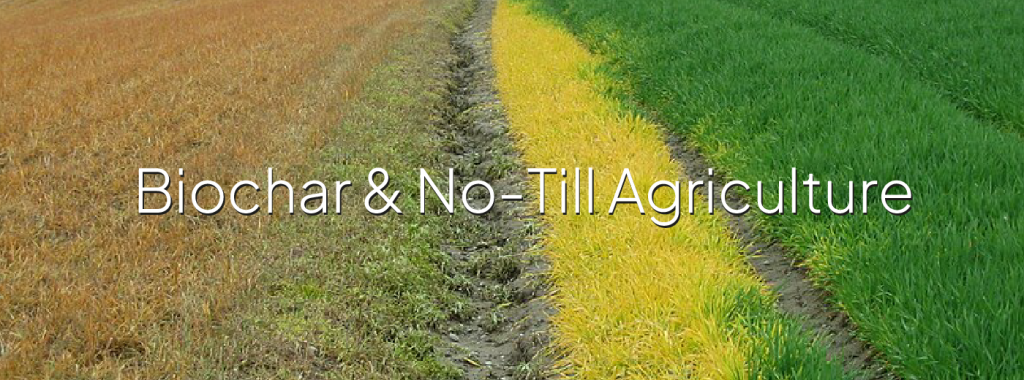
No-till farming to prevent soil erosion, photo by Volker Prasuhn
Biochar and No-Till Agriculture: A Path to Healthier Soil and Sustainable Farming
Going back centuries, farming has relied on tilling the soil to prepare it for planting. Tilling the soil helps break up compacted earth and bury crop residues. Many crops are annual so roots, stocks and leaves can remain after harvest. Tilling helps remove these residues where diseases can linger while refreshing the soil and reducing any overly abundant insect habitat. However, over time the consequences of tilling became evident. Negative impacts include soil degradation, erosion, and the depletion of vital nutrients. Tilling disturbs the soil’s natural structure, leading to reduced water retention and the loss of organic matter. Also, in drier regions tilled soil loses considerable moisture. In contrast, no-till farming which has recently seen renewed interest seeks to preserve the soil’s integrity by leaving it less disturbed by planting crops directly into the existing soil without turning it over. In many cases, this method promotes better water retention, enhances soil structure, and increases biodiversity. Combining no-till with biochar offers even greater soil enhancement and makes for a natural partner to no-till strategies. Biochar, a carbon-rich product of pyrolysis, improves soil fertility, water retention, and microbial activity and may prevent yield drops that follow cover-cropping by maintaining nutrients and moisture. ARTi and the Rodale Institute worked together on a no-till and biochar trial.
Biochar improves soil fertility, carbon storage, and health, enhancing no-till farming practices while offering a sustainable, long-term productivity enhancement.
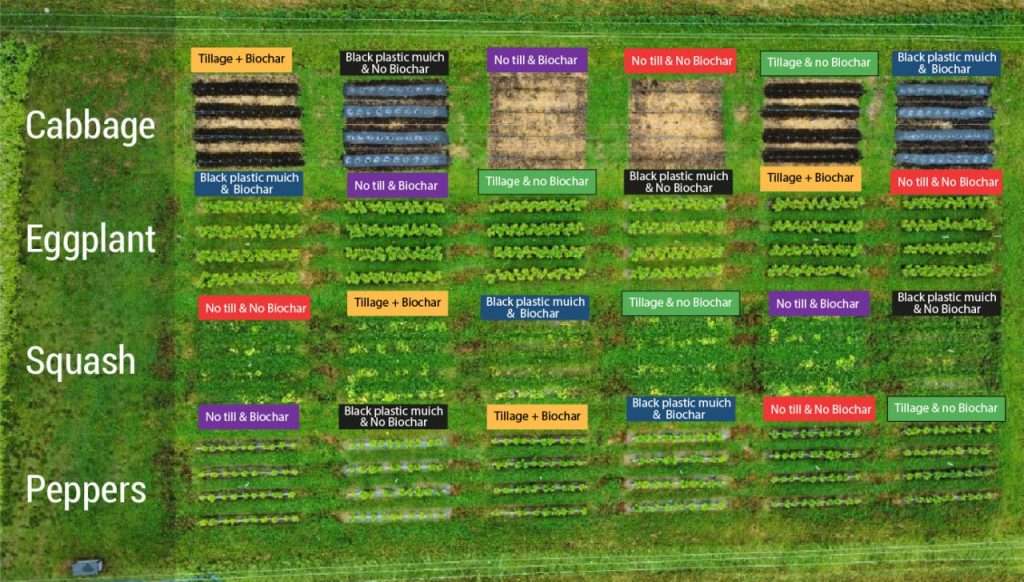
The no-till and control plot combinations at the Rodale Institute’s Midwest Organic Center.
At ARTi, we are committed to advancing biochar science for sustainable environmental solutions. In collaboration with the Rodale Institute’s Midwest Organic Center in Marion, IA, we initiated a research project together to explore the impact of biochar in a vegetable production system. Among other goals, one particularly interesting topic was examining how no-till management, combined with biochar application, affects soil health and nutrient leaching compared to conventional practices like tillage with black plastic mulch. This study highlights our focus on innovative practices that support sustainable agriculture and environmental resilience.
You can read an article more specifically on ARTi’s project with Rodale Institute here at this (link).
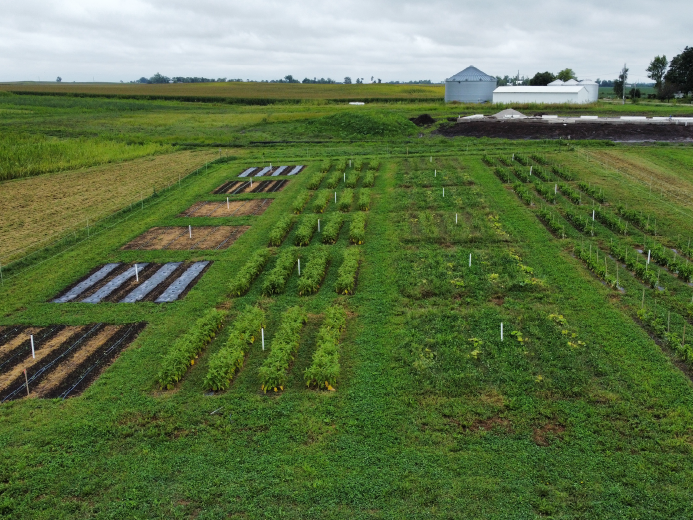
The no-till and control plot combinations.
At the Rodale Institute Midwest Organic Center, researchers are exploring the synergy between no-till practices and biochar application. According to Sean Stokes, PhD, Research Director at the MOC, their ongoing project seeks to assess how these two strategies complement each other. One promising aspect of this approach is that biochar only needs to be applied and integrated into the soil once, typically through tillage. Afterward, the land can transition seamlessly into a no-till system, preserving the benefits of biochar while supporting soil health and reducing disruption.
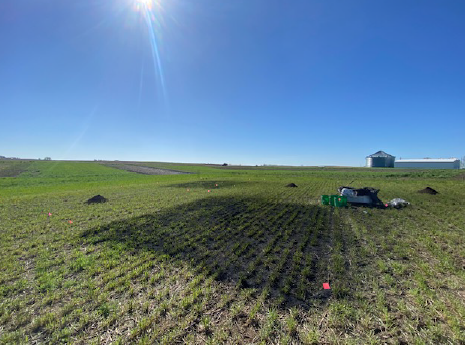
One of the plots with biochar present.
The Rodale Institute advocates for organic no-till agriculture as a sustainable alternative to traditional tillage methods, emphasizing the importance of healthy soil for productive farming. By utilizing cover crops and innovative tools like the roller-crimper, farmers can enhance soil quality, conserve moisture, and suppress weeds without relying on petroleum-based products like black plastic. This approach not only reduces plastic waste and herbicide usage but also improves soil health, leading to better crop resilience and profitability. The Institute’s research demonstrates that organic no-till can yield comparable, if not higher, profits while minimizing environmental impact, ultimately contributing to a more sustainable agricultural system for all farmers. (Feeser, J., Et al., 2014)
Another focus of the research is addressing a common challenge in no-till farming which is the initial yield drag experienced during the transition period. Stokes noted that the summer of 2025 will mark their first full season of no-till, offering an opportunity to analyse whether biochar can help mitigate this yield drag. If successful, this combination could provide a more sustainable and productive pathway for farmers adopting no-till systems.
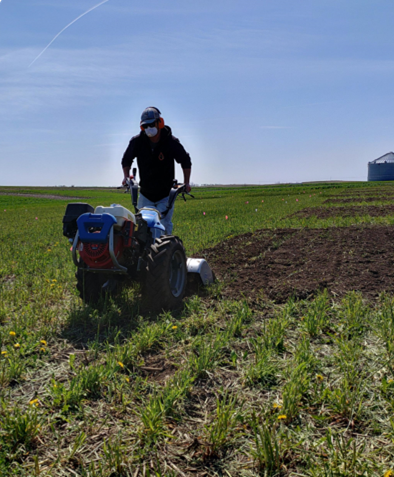
MOC Research Director Sean Stokes tilling in the biochar.
No-till farming makes use of cover crops to protect the soil and improve its health while at the same time minimizing disturbance. In fact, the point of no-till is to bring down the amount of soil disruption. For example, cover crops such as legumes and grasses improve the structure of the soil, add organic matter and suppress weeds. Together, this creates a conducive environment for subsequent crops. Adding biochar to cover crops for a no-till plot may enhance their benefits even further. However, it must be noted that there are many types of biochar and cover crops as well as types of growing environments. Such factors will influence a number of decisions.
Adding biochar to cover crops in no-till plots may enhance their benefits, but the types of biochar, cover crops, and growing environment all play a role in decision-making.
Biochar, a stable form of carbon produced from organic materials through pyrolysis, can improve soil fertility and water retention, providing a slow-release nutrient source. Its porous structure can enhance microbial activity, supporting nutrient cycling and resilience in the soil ecosystem. These traits may help prevent yield drops that often occur after cover cropping by maintaining nutrient availability and improving soil moisture levels. All of which are benefits that ARTi works on to enhance every day.
Moreover, biochar can mitigate potential nitrogen tie-up from the decomposition of cover crops, ensuring that essential nutrients remain accessible to subsequent crops. By enhancing soil health and fertility, biochar could create a synergistic relationship with cover crops, making it a valuable amendment in no-till systems and promoting consistent yields over time. It is quite possible that the combination of no-till practices with cover cropping, and biochar application presents a promising approach to sustainable agriculture, fostering both soil vitality and crop productivity.
Stay tuned as we analyse the results of this study. We are looking forward to sharing insights on how biochar and no-till practices influence soil health, nutrient retention, and sustainable vegetable production. Follow us at ARTi for updates as we continue to explore innovative solutions for regenerative agriculture.
References:
Feeser, J., Et al., 2014, Beyond Black Plastic: Cover crops and organic no-till for vegetable production, Rodale Institute (link)

