

ARTi Supports Biochar Research at the Rodale Institute Midwest Organic Center
At ARTi, we are always interested in advancing the science of biochar for environmental solutions. In collaboration with Rodale Institute, a leader in organic agricultural research, we recently had the chance to initiate a research project at their Midwest Organic Center in Marion, IA that addresses the question, “in a vegetable production system, what is the impact that biochar has on crop yield, nutrient leaching, and soil health?
Rodale Institute (link) is a stand-out name in regenerative agriculture and organic farming. The rise of chemical-based agriculture has fundamentally affected the way food is produced, resulting in unforeseen consequences such as soil health degradation, organic matter loss, erosion, water pollution, toxic residues, and a lack of biodiversity. The institute was founded in 1947 and ever since, has been at the forefront of advocating organic agriculture as a more natural, regenerative agricultural system.
Organic farming practices focus on cultivating healthy soil without synthetic chemical inputs, leading to healthier foods and people. Rodale Institute’s Farming Systems Trial has proven organic agriculture performs as well as conventional agriculture, if not better, by rebuilding soil health and creating economic vitality in rural communities. Because healthy soil leads to healthy food and ultimately healthy people.
We are proud to share that ARTi has supported a research trial with Rodale Institute by donating biochar to the Midwest Organic Center for an investigation into the impact of biochar and tillage practices on crop yield, nutrient leaching, and soil health in a vegetable production system.

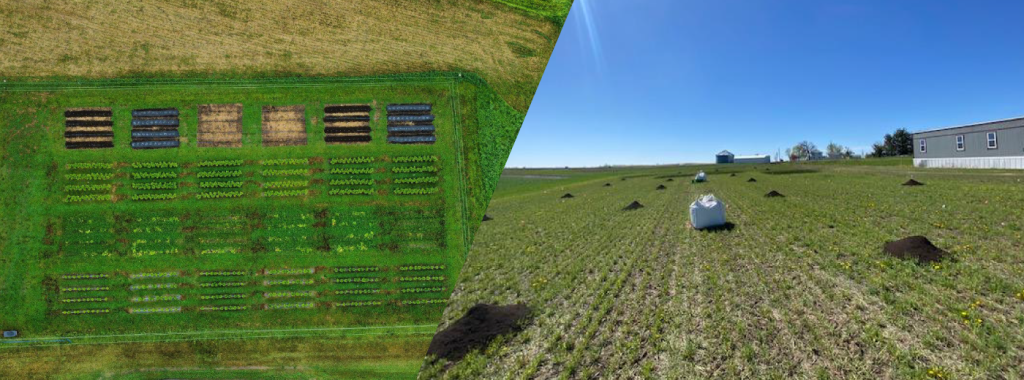
Aerial view of Rodale Institute Midwest Organic Center just outside of Cedar Rapids, Iowa. A two-hour drive from ARTi Headquarters in Des Moines.
Experimental Design:
The vegetable garden’s experimental design includes six total treatment plots (a combination of no-till, strip-till, or full-till with black plastic mulch either with or without biochar), each treatment has four replicates in a randomized complete block design. Each block of treatments (vertical rows in the diagram below) will have a different vegetable in a predetermined crop rotation; the four vegetables to be grown are butternut squash, cabbage, bell pepper, and eggplant. Each treatment plot will be 20 feet x 20 feet and have 4-rows of vegetables, with a 5–10-foot space between each plot. The east and west margins of the garden will be planted with a variety of flowers, but the north and south sides will remain open to allow a tractor to enter, if necessary, but it will primarily be managed by smaller, push-behind equipment. The entire garden will be surrounded by a “3-D” electrified deer fence that was shown to be effective in a previous research project at the Midwest Organic Center.
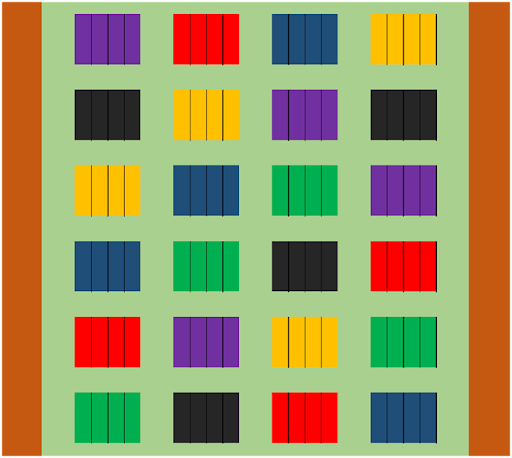
Diagram of the vegetable garden with a randomized complete block design layout. The different treatment plots are color coordinated above: yellow for strip till and biochar, green for strip till and no biochar, purple for no-till and biochar, red for no-till and no biochar, black for black plastic mulch and no biochar (control), and blue for black plastic mulch and biochar. The light green is a perennial grass that will grow between treatments, while the brown margins will serve as a pollinator garden.
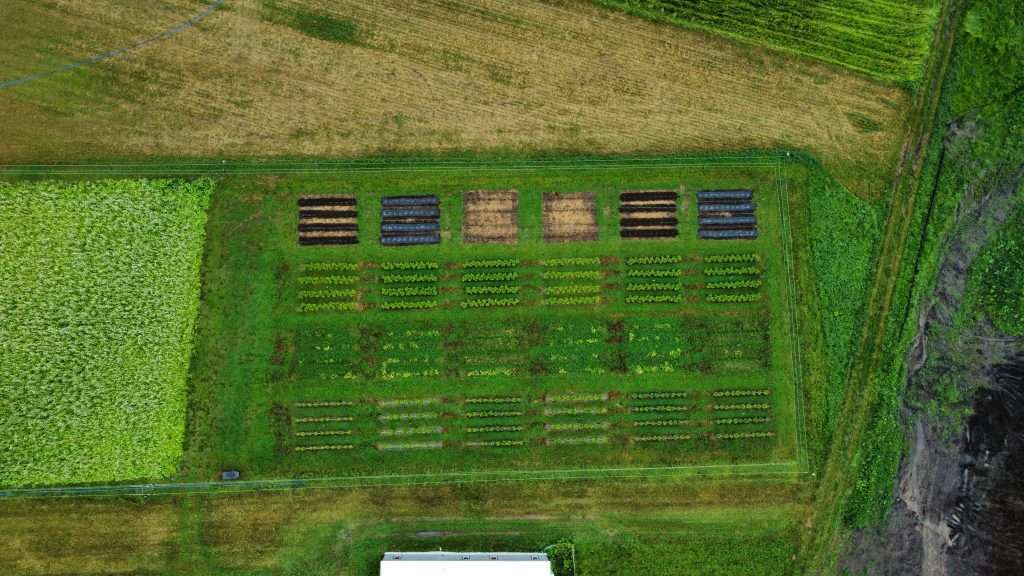
Bird’s eye view of the trial plots as seen at the Rodale Institute Midwest Organic Center. Picture rotated 90 degrees counterclockwise from the above diagram of plot layout. Cabbage is planted on the top row, then eggplant, butternut squash, and bell peppers on the bottom.
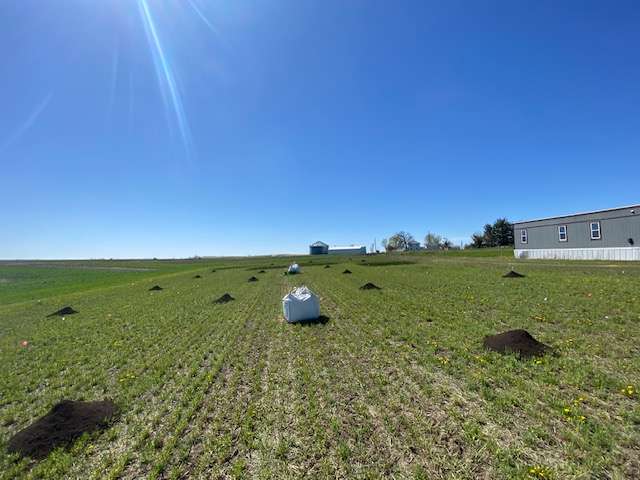
The beginning of the biochar application.

The biochar has been spread on a trial plot at 5 tons/acre.
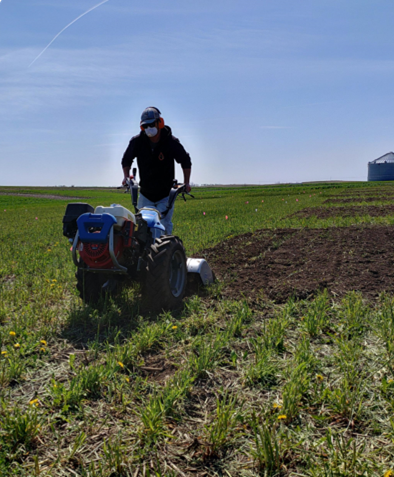
MOC Research Director Sean Stokes tilling in the biochar.
Experimental Plot Set-up:
In 2024 (year 1), the garden had a cover crop mixture of rye and hairy vetch, which was mechanically terminated in the spring. In year 1, each treatment plot had compost integrated into the soil at 11 tons/acre and when appropriate, it was combined with biochar at a rate of 5 tons/acre for biochar. All treatments had these amendments integrated into the soil with tillage (~4 inches deep) but moving forward, the no-till plots will not be tilled again. After planting vegetable seedlings, a white clover “living mulch” was seeded between rows to help manage weeds and provide long-term soil coverage. Each treatment plot has four 30″ wide rows for vegetables, with eggplant, cabbage, bell peppers, and butternut squash planted in either single or double-staggered rows. Lysimeters were installed 18″ deep, directly in the middle of the plot, to enable year-round crop management while still allowing for water quality analysis throughout the growing season. A lysimeter is a cylindrical tube with a porous tip that allows sub-surface water to infiltrate and be collected, so it is used to investigate the movement of water and nutrients through the soil.
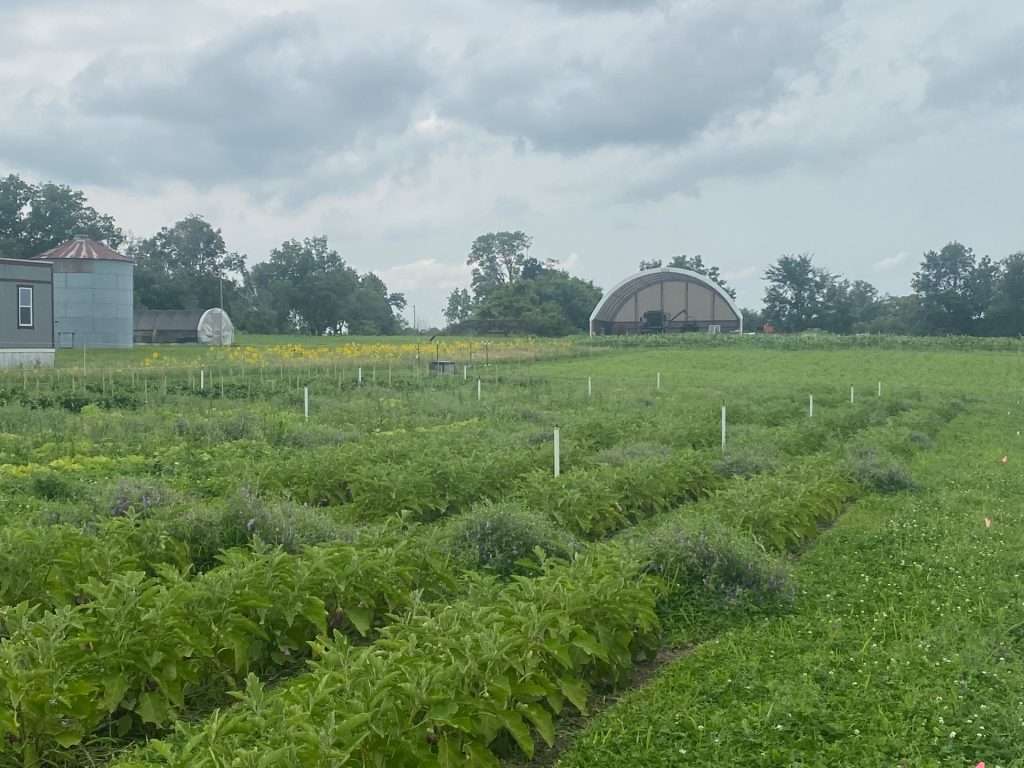
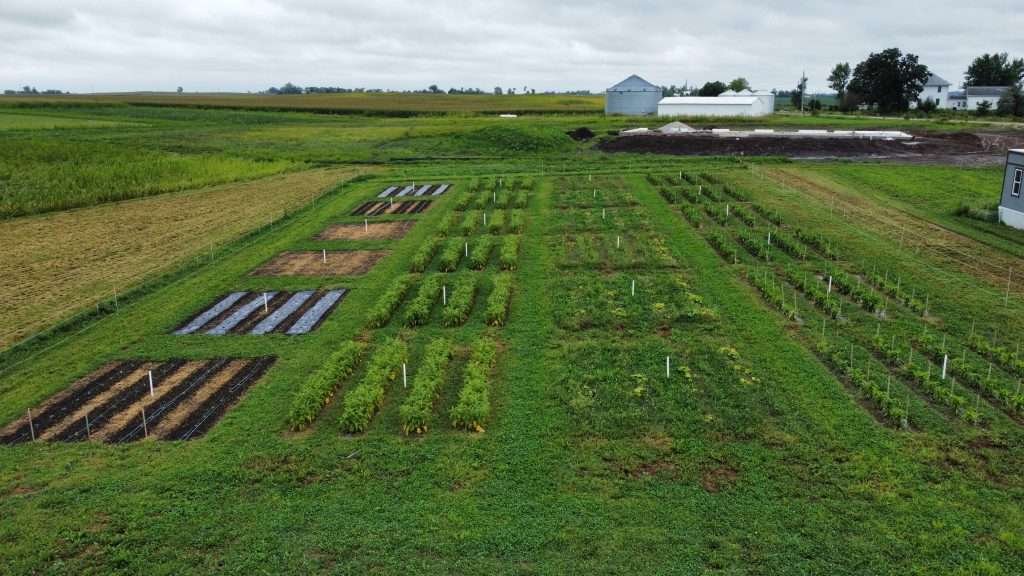
A closer view of the vegetable garden with flowers in between plots to attract pollinators.
Long-term Management:
Strip-tilled plots will have a 30″ strip of tillage every spring before planting, while black plastic plots will have the entire plot tilled before black plastic mulch is added. Landscape fabric will be laid down before planting in the no-till plot to eliminate weeds via solarization. Solarization kills weeds by covering soil with fabric, trapping heat from the sun to raise soil temperatures high enough to destroy weed seeds and pests. Compost and granular fertilizer will be applied during planting, while liquid fertilizer will be applied through a drip line during summer. Double lines of drip irrigation will be installed at the start of each season. Throughout the growing season weeding will be done manually and this labor tracked as a data point that varies depending on the tillage practice, with black plastic mulch requiring significantly less manual weed control.
The Vegetable Gardens:
Organic vegetable seeds will be planted in a greenhouse for 4-8 weeks before transplanting into the field. Butternut squash, eggplant, and bell peppers will be started in spring and transplanted in late May-early June. Cabbage seeds will be started in July and planted in August. Harvesting of squash and cabbage will happen once, while bell peppers and eggplants will be harvested every other week. After yield is quantified, all produce is donated to a local food bank, Feed Iowa First, to support those experiencing food insecurity in Cedar Rapids. So far this year, over 2000 pounds of bell peppers and eggplant have been donated.
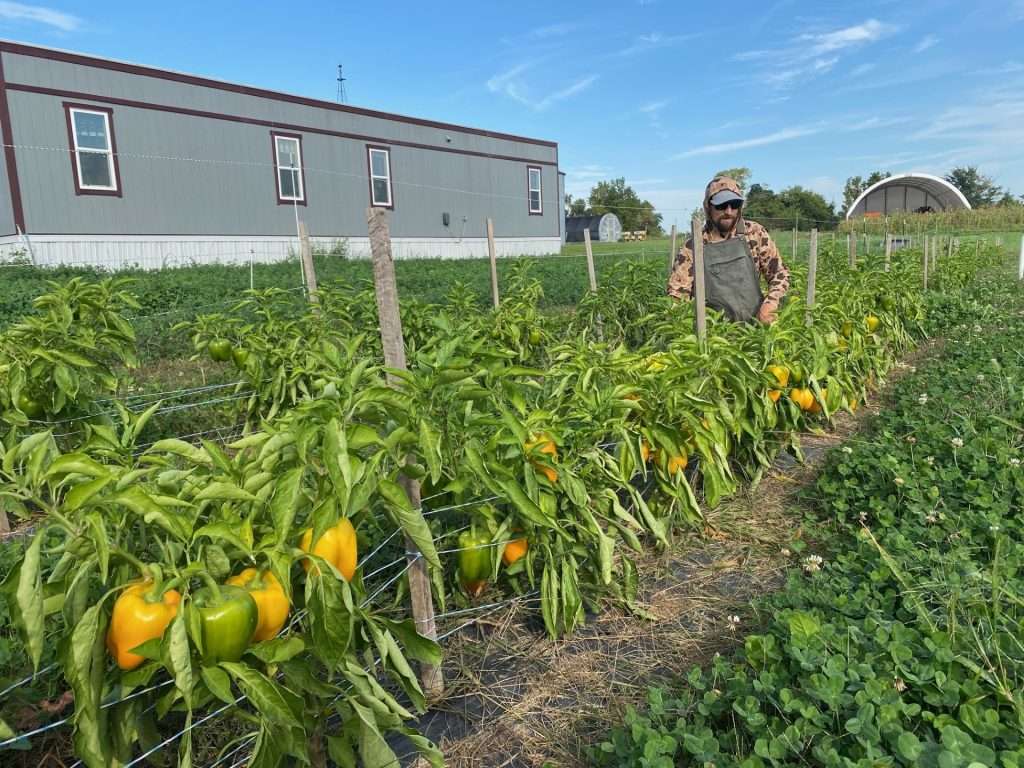
MOC Farm Manager Drew Erickson harvesting bell peppers.
While data analysis is still forthcoming, this collaboration between ARTi and Rodale Institute marks a worthwhile step in examining any possible benefits offered by biochar in terms of sustainable farming practices and soil health. We look forward to sharing our findings in the future as we continue to work together.


This Post Has 2 Comments
Good stuff! Can’t wait to see the results. What metrics will you use to assess value of the biochar addition ? Increase in yields, less water needed, increase in nutrition?
Hello,
The study investigates the effects of no-till management and biochar amendments on soil health, nutrient leaching, and crop yield in vegetable production, predicting improved soil health and reduced yield lag. So, we will be looking at all of these facets. First to see what the actual results we observe are, then to see if our own hypotheses were correct and then make an overall assessment. Thanks for your interest.