

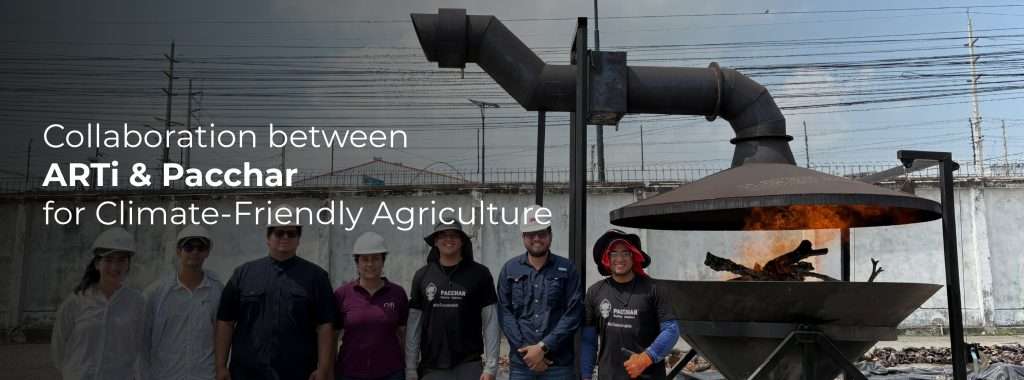
ARTi has been collaborating with Pacchar, a startup in southern Ecuador that transforms agricultural and forestry waste into biochar through pyrolysis. Led by Carlos González, Pacchar is dedicated to sustainable agriculture, waste management, and climate change mitigation. By capturing carbon and improving soil health, the initiative aligns with the UN’s Sustainable Development Goals (SDGs).
ARTi and Pacchar are leading a transformative project in Ecuador focused on promoting sustainable agriculture by using biochar. This initiative aims to enhance soil health, increase crop yields, and reduce dependence on chemical fertilizers. By converting biomass into biochar, the project not only reduces greenhouse gas emissions but also generates renewable energy, contributing to rural energy independence. Additionally, it fosters connections between urban and rural sectors by repurposing urban green waste into valuable compost, further supporting sustainability and circular economy practices.
A key component of this effort is the C-Sink Farmer’s Network, a program that trains farmers to convert their biomass residues into biochar and reintegrate it into their soils. This not only enhances soil fertility but also promotes circular economy farming models while generating new income opportunities for rural communities.
To ensure the credibility and transparency of these climate-positive actions, Pacchar and ARTi implement Measurement, Reporting, and Verification (MRV) processes. MRV tracks the impact of biochar production on carbon sequestration, allowing certified farmers to earn additional income through carbon credits, further incentivizing sustainable practices.

Strong partnerships with local governments and stakeholders enhance the project’s impact and further bolster Ecuador’s leadership position in regenerative agriculture, while offering a scalable model for sustainability worldwide. One of the key methods in this initiative is the use of Kon-Tiki kilns, a low-cost, efficient biochar production technology that empowers farmers and promotes a circular economy.
The Kon-Tiki Kiln: A Sustainable Solution for Biochar Production
The Kon-Tiki kiln is an artisan, low-tech pyrolysis method designed to convert organic waste into biochar efficiently. It provides a practical and accessible solution for biochar production, particularly in rural settings. By transforming agricultural residues like cacao husks, shells, and other biomass, the Kon-Tiki kiln provides farmers with an eco-friendly solution for managing waste while enhancing soil health from the valuable benefits of biochar.
How It Works:
Biomass Residue Collection: Agricultural residues, such as cacao husks and shells, are gathered. These materials, which would otherwise be burned or left to decay in the field, are repurposed for biochar production.
Drying: The collected biomass is sun-dried until its moisture content drops below 30%, ensuring optimal efficiency and effectiveness during the pyrolysis process.
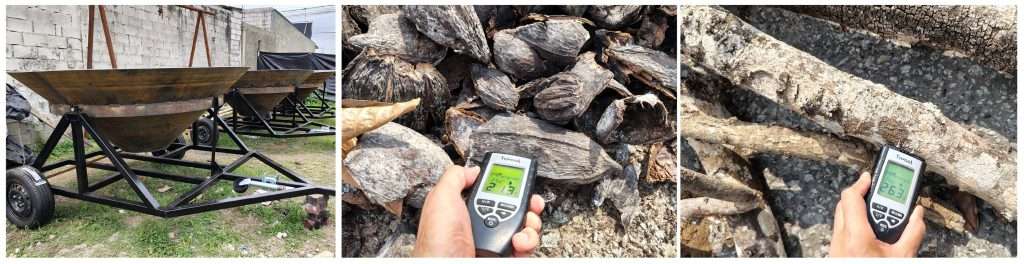
From left to right: Pacchar’s array of Kon-Tiki kilns, Cacao husks are being checked for moisture levels and Wood residues which make for good biochar feedstock.
Pyrolysis: In a Kon-Tiki kiln, the dried biomass is heated in a controlled, oxygen-limited environment. This pyrolysis process prevents combustion and transforms the organic material into biochar, capturing carbon in a stable form.
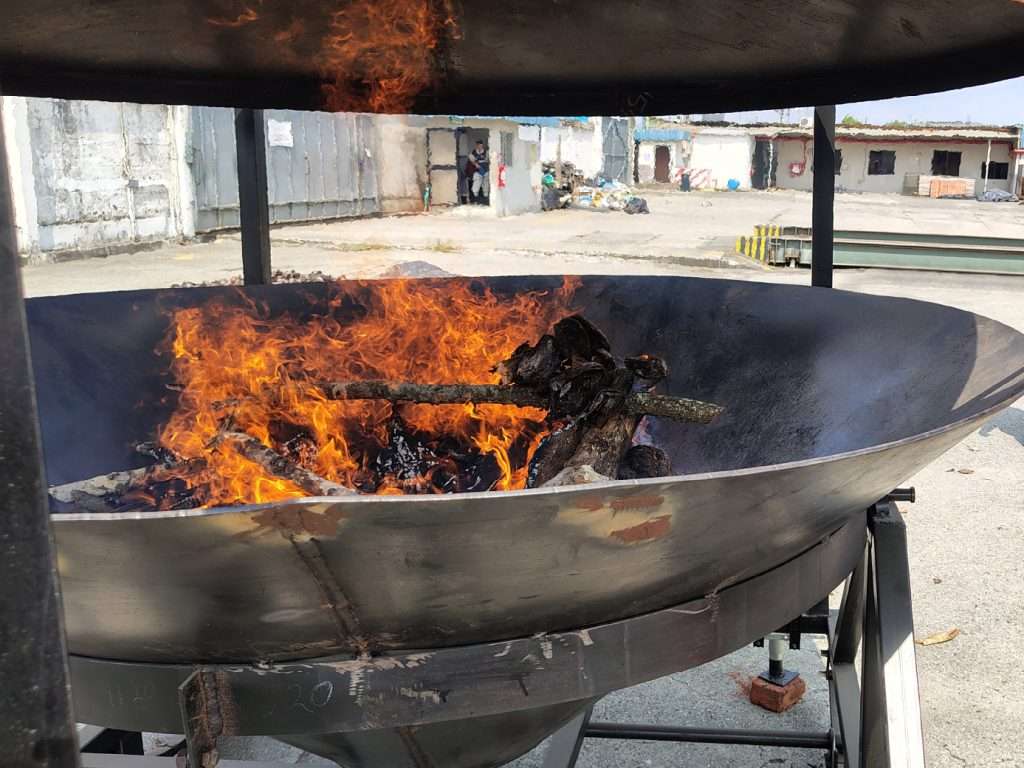
Here the biomass is being pyrolyzed. When the lid is dropped down and the oxygen level is greatly reduced, pyrolysis and subsequently biochar production is completed.
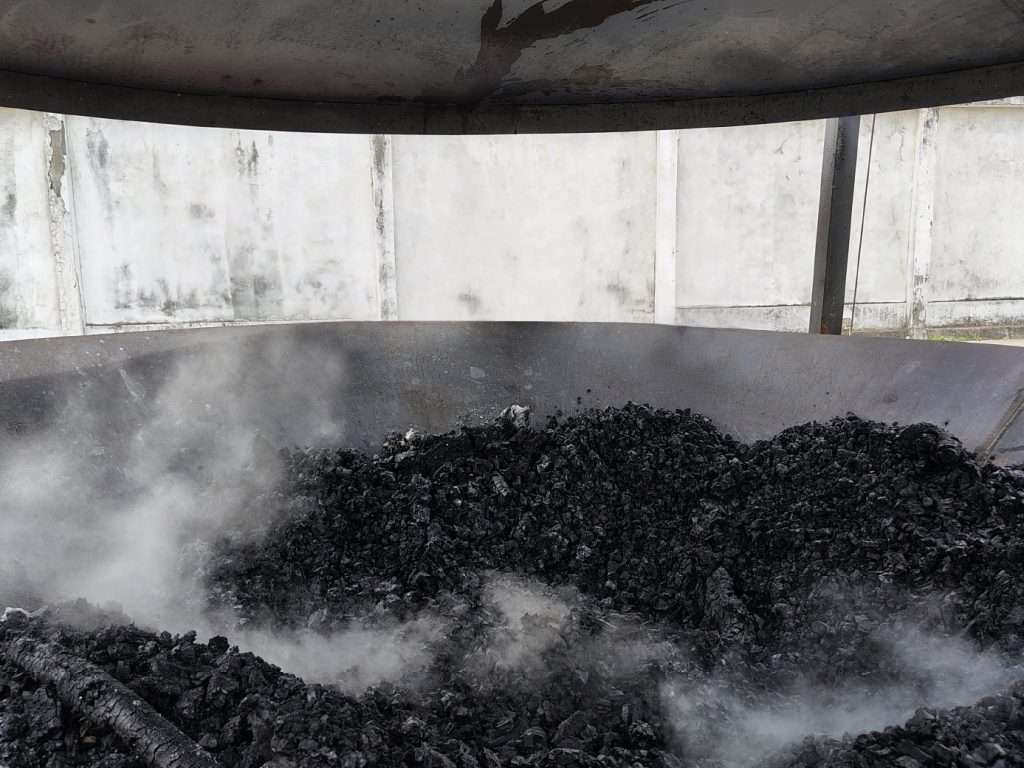
A nice amount of biochar can be produced by the Kon-Tiki kiln, having an average yield of 20% by weight.
Cooling & Grinding: Once the pyrolysis is complete, the biochar is allowed to cool before being ground into smaller, uniform particles. This makes the biochar easier to apply to soils.
Inoculation (Optional): To enhance the biochar’s nutrient content and microbial activity, it can be inoculated by soaking it in compost tea or mixing it with organic fertilizers. This step boosts its ability to retain and release nutrients, further benefiting the soil.
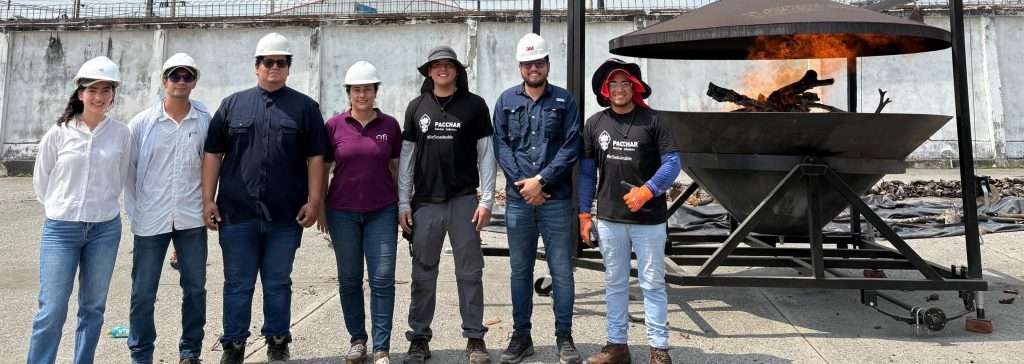
Pacchar Team with their Kon-Tiki Biochar Kiln (Carlos González third from right)
Job Creation & Economic Growth: The biochar production process creates direct and indirect employment opportunities in rural communities, creating new income streams through carbon farming.
Circular Economy: Kon-Tiki kilns support circular economy models by recycling agricultural waste into a valuable resource. The resulting biochar can be reapplied to farms, enhancing soil quality and closing the loop between waste generation and resource recovery.
ARTi has supported Pacchar, a biochar enterprise in Ecuador, since 2021. The business has expanded across the country due to its unique ecosystems and climates. Ecuador, a major banana exporter, is also a key market force in cocoa and flowers. Pacchar, led by Carlos González, focuses on sustainability and carbon neutrality in agricultural production.
Pacchar leads an agricultural-environmental initiative in Ecuador that transforms residual forest and agricultural biomass into biochar, compost, and derivatives for regenerative agriculture. This project, in collaboration with ARTi and local governments, utilizes an innovative pyrolysis process to address environmental concerns like greenhouse gas emissions while enhancing waste management and sustainable agricultural practices, such as soil organic carbon and biodiversity regeneration.
Aligned with COP26 goals, this initiative focuses on reducing atmospheric carbon by capturing it and sequestering it in depleted soils in the form of biochar. In addition to mitigating climate change, the process enhances agricultural productivity. By promoting commercial forest plantations, establishing ecological reserves, and engaging farmers in the biochar network, the project delivers benefits for both the environment and local economies.
Pacchar’s use of Kon-Tiki kilns in Ecuador represents a scalable, community-based model for sustainability. By working closely with local governments and stakeholders in cities like Guayaquil, Quito and Cuenca, the project ensures that it aligns with the needs of the community, making Ecuador a leader in sustainable agriculture and waste management.
As more agricultural communities and corporations recognize the potential of biochar, this innovation has the power to transform farming into a more sustainable and profitable enterprise by improving soil health, reducing waste, and mitigate climate change on a global scale.
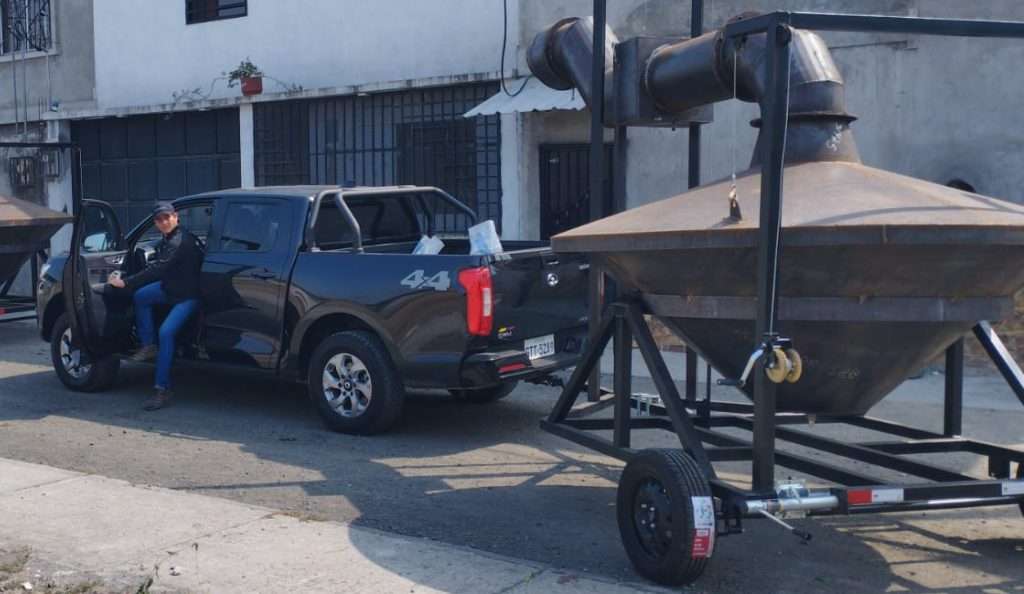
Similar to ARTi’s philosophy, the kilns are easily transportable.
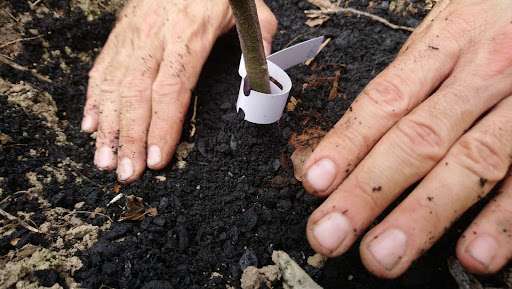
The finished biochar is added to the soil.

