

Leveraging Biochar-Based Fertilizers to Boost Corn Growth and Promote Sustainable Farming Practices
A research study titled Greenhouse Evaluation of Biochar-Based Controlled-Release Nitrogen Fertilizer in Corn Production (Rubel, I. R., et al., 2022) highlights the transformative potential of biochar-based controlled-release nitrogen fertilizers (BCRNFs) in agriculture. As a company, ARTi prioritizes assisting research into biochar’s possible applications. Central to the investigation into biochar-enhanced fertilizer was the biochar supplied by ARTi. The resulting development of BCRNFs significantly improved corn yield and nitrogen use efficiency while minimizing environmental impact.
The study explored the use of biochar-based controlled-release nitrogen fertilizers (BCRNFs) to tackle the issue of low nitrogen use efficiency (NUE) in corn production.
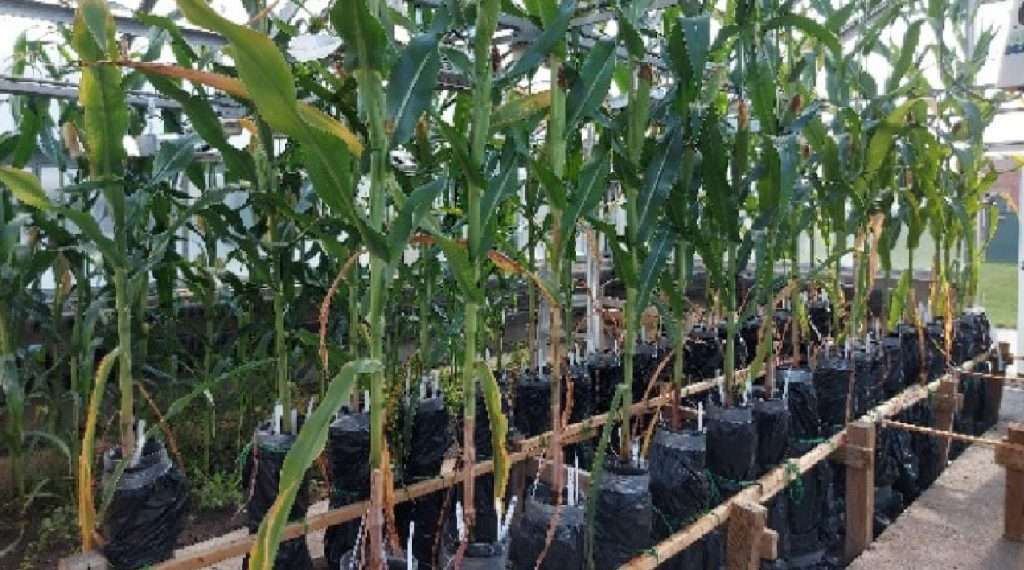
Corn plant images in the greenhouse trial arrangement planted in the soil columns. The black polythene bag is used to cover the roots.
The study explored the use of biochar-based controlled-release nitrogen fertilizers (BCRNFs) to tackle the issue of low nitrogen use efficiency (NUE) in corn production. Low NUE contributes to poor yields and nitrogen runoff, harming the environment and agricultural viability. The research assessed whether BCRNFs could improve yield while reducing nitrogen leachate. Nitrogen leachate refers to nitrogen, typically nitrate (NO₃⁻), that dissolves in water and moves through the soil into groundwater or surface water systems. This process often occurs when excess nitrogen from fertilizers or organic matter is not absorbed by plants or retained in the soil. Nitrogen leachate is a major environmental concern as it can lead to water pollution, causing problems like algal blooms, hypoxia, and contamination of drinking water sources, all of which harm ecosystems and human health. Ultimately, the study sought to demonstrate that BCRNFs could offer a more sustainable, environmentally friendly solution to the challenges of nitrogen management in farming.
Ultimately, the study sought to demonstrate that BCRNFs could offer a more sustainable, environmentally friendly solution to the challenges of nitrogen management in farming.
The research highlighted several significant outcomes of using fertilizers formulated with the biochar provided by ARTi. Corn yield improved notably compared to conventional fertilizers, showcasing the potential for enhanced agricultural productivity. Biochar-based controlled-release nitrogen fertilizers (BCRNFs) also reduced nitrogen leachate, addressing a key environmental concern by minimizing nutrient runoff into water systems. Furthermore, the biochar facilitated the controlled release of nitrogen, optimizing its availability for crop uptake and improving nitrogen use efficiency. These findings underscore the dual agricultural and environmental benefits of incorporating biochar into fertilizer systems. The study highlights the potential of biochar-based controlled-release fertilizers as sustainable solutions for agricultural practices, indicating that biochar plays a crucial role in addressing the challenges of low nitrogen use efficiency and environmental impact in agricultural production.
Innovative Methods
Researchers at South Dakota State University combined ARTi biochar with ammonium sulphate, bio-asphalt, and rice starch in different formulations to create the BCRNFs. Experiments measured nitrogen release patterns and leachate reduction, emphasizing the controlled-release mechanism’s success in maintaining soil and water quality.
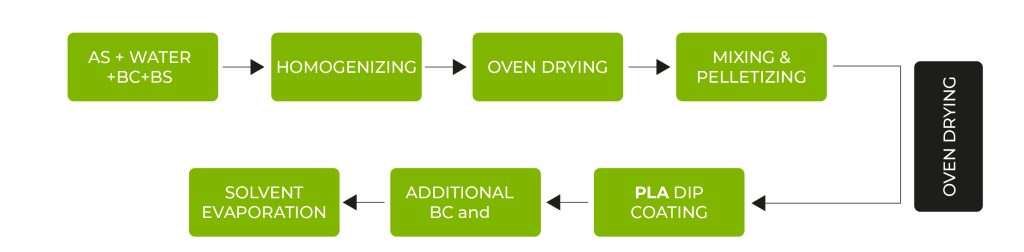
Flowchart illustrating the preparation of S1 and S2 fertilizers using BC and BS. The process involves homogenization at 5000 rpm, moisture reduction through oven drying, dip-coating with a poly-lactic acid solution, and separation using biochar before final drying to evaporate the coating solvent. AS = ammonium sulphate, BC = Biochar and BS = biosolid.
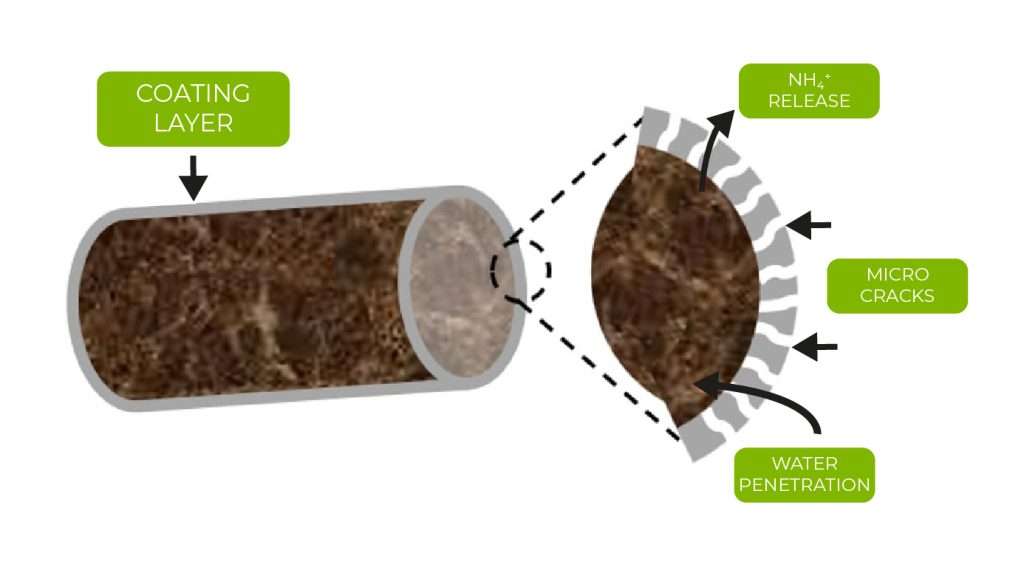
Hypothetical nitrogen release mechanism: PLA (poly-lactic acids) -coated fertilizer particles form a barrier, allowing nitrogen to diffuse gradually and extend release time.
Sustainable Agriculture and ARTi
This research underscores biochar’s critical role in developing fertilizers that improve crop productivity while protecting the environment. ARTi sets a new standard for sustainable farming solutions by combining high-quality biochar with innovative agricultural practices. These findings highlight biochar’s scalability and its potential for use in a wide range of crops, paving the way for a greener future.

Control = No soil amendments compared with AS = Soil amended with Biochar + ammonium sulphate. Ammonium sulphate is a fertilizer that provides nitrogen and sulphur, essential nutrients for plant growth.
Further Research
The study highlighted the promising results of biochar-based controlled-release nitrogen fertilizers (BCRNFs) in corn production. It indicated that while the results for BCRNFs are auspicious, further tests will be necessary under actual field conditions to assess the effectiveness of controlled release. This call for further research emphasized the importance of validating the performance of BCRNFs in real-world agricultural settings on different scales, ensuring that the promising outcomes observed in the greenhouse trial can be effectively translated into practical and sustainable agricultural practices.
Article citation:
Rubel, R. I., Wei, L., Wu, Y., Gupta, S., Alanazi, S., Sobhan, A., Osabutey, A., & Yang, X. (2023). Greenhouse evaluation of biochar-based controlled-release nitrogen fertilizer in corn production. Agricultural Research (Link)

