


Dr. Bernardo del Campo Returns to Iowa State with a Talk to Inspire Students with Biochar and Carbon-Negative Innovations
In October 2024, Dr. Bernardo del Campo, CEO of ARTi, returned to his alma mater, Iowa State University, to inspire students in the Biorenewables course with insights on the potential of biochar and carbon-negative technologies. Holding two PhDs in Mechanical Engineering and Agricultural and Biosystems Engineering respectively from Iowa State, Dr. del Campo shared his remarkable journey from graduate research to founding ARTi, a company dedicated to advancing biochar and sustainable innovations.
During his lecture, Dr. del Campo highlighted ARTi’s mission: leveraging carbon-negative technologies to transform agricultural waste into valuable resources such as biochar, syngas, and renewable energy. Combining technical expertise with enthusiasm, students learned how ARTi’s innovations address critical environmental challenges, including CO2 sequestration, soil degradation, and waste management, while fostering sustainable agricultural practices.
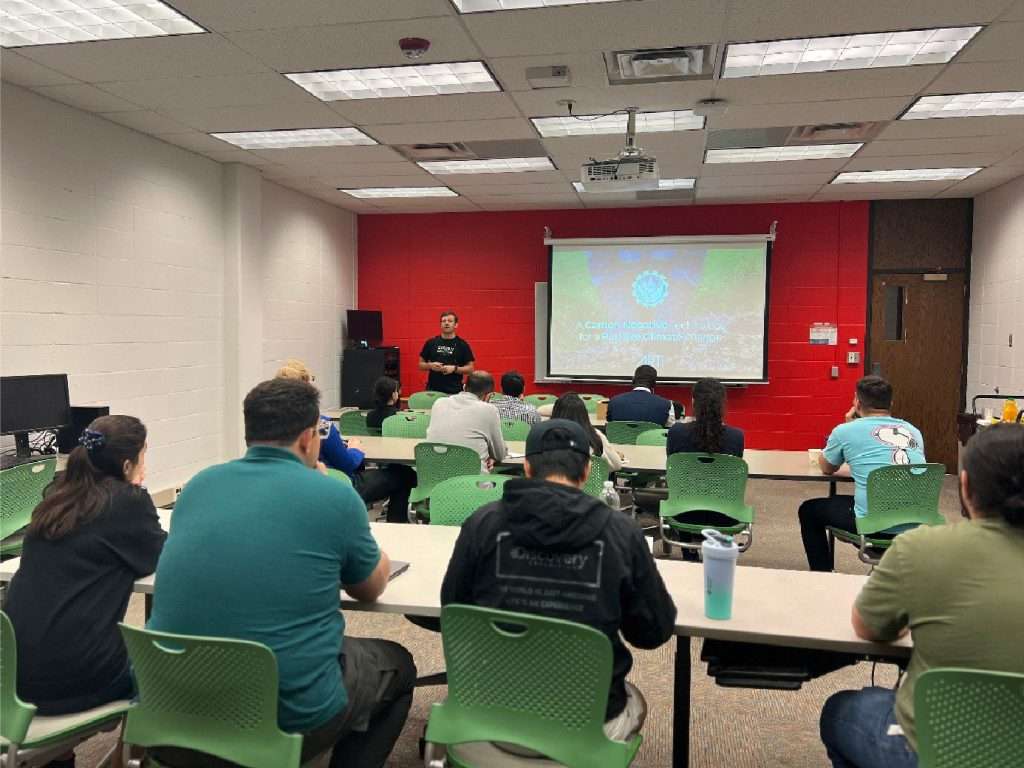
Dr. del Campo discussed ARTi’s mission to convert agricultural waste into valuable resources like biochar, syngas, and renewable energy, addressing environmental issues and promoting sustainable practices.
Dr. del Campo detailed how biochar, a stable form of carbon produced through pyrolysis, sequesters carbon dioxide for centuries by preventing biomass from decomposing into CO2 and methane. This process transforms agricultural and forestry waste into a powerful tool for carbon removal and soil regeneration, reducing greenhouse gas emissions, improving soil fertility, and enhancing livestock environments by absorbing ammonia in confined animal facilities.
Beyond agriculture, biochar’s versatility shines in diverse applications. It has the potential to reduce the carbon footprint of concrete while enhancing its durability in construction and can serve as an effective material for environmental toxin remediation in healthcare due to its absorptive properties. ARTi’s collaboration with the University of Alberta exemplifies this versatility, together incorporating biochar into innovative concrete designs, such as toboggan skis. Traditionally crafted from materials like plastic or metal, these eco-friendly skis demonstrate biochar’s potential as a sustainable alternative. This innovation has been playfully referred to as “cooler runnings,” drawing inspiration from both eco-conscious solutions and the classic film about an underdog Olympic toboggan team.
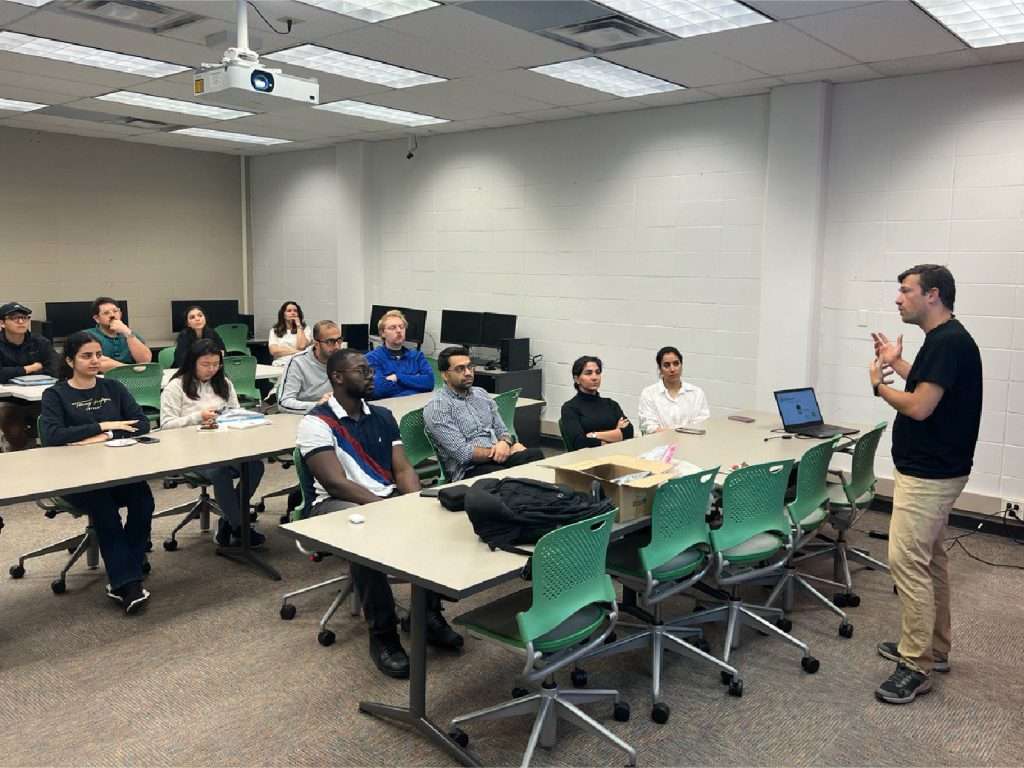
As both a scientist and entrepreneur, Dr. del Campo underscored the importance of interdisciplinary collaboration, innovation, and perseverance.
Such partnerships not only expand the practical uses of biochar but also underscore ARTi’s commitment to advancing sustainable innovation through cutting-edge research and collaboration.
Dr. del Campo also emphasized ARTi’s global impact through its innovative pyrolysis systems, capable of processing a wide range of organic materials, from chicken litter to sawdust, to produce high-quality, application-specific biochar. ARTi’s scalable and transportable pyrolysis production units offer sustainable solutions across various sectors, including agriculture, energy, and construction. Notably, biochar-enhanced concrete developed by ARTi not only improves material performance but also significantly reduces carbon emissions, showcasing the company’s commitment to environmentally friendly innovation.
In his presentation, Dr. del Campo outlined ARTi’s innovative approach to climate change, soil health, and biomass waste management solutions. ARTi started with small-scale experiments and grants, evolving into an international enterprise designing cutting-edge pyrolysis systems for a variety of industries.
As both a scientist and entrepreneur, Dr. del Campo underscored the importance of interdisciplinary collaboration, innovation, and perseverance. He urged students to take advantage of Iowa State’s entrepreneurial resources and to think creatively about leveraging technology to solve environmental challenges.
Dr. del Campo’s visit was more than just a technical lecture, it was a full-circle moment, linking his entrepreneurial roots at Iowa State to ARTi’s current global impact. His presentation highlighted how research and innovation can drive meaningful change, inspiring the next generation of engineers and environmentalists to explore the transformative potential of sustainable technologies.
For both students and faculty, his lecture served as a powerful reminder that with vision and determination, science can pave the path to a more sustainable future. ARTi’s unwavering commitment to innovation and sustainability continues to fuel the development of cutting-edge technologies that not only address pressing environmental challenges but also create lasting benefits for future generations.
Visit Iowa State University Bioeconomy Institute here at this (link)

