


By inoculating biochar, you infuse it with essential microbes that enrich the soil.
Pure biochar, that is only the carbonized material, must be inoculated with nutrients by mixing it with compost or any other organic matter to unlock its full benefits in the garden or for farming or any other soil remediation project. Raw biochar lacks beneficial microbial life. By inoculating biochar, you infuse it with essential microbes that enrich the soil.
The original ancient terra preta soils found in the Amazon which ignited the biochar sector did have biochar but also contained many other materials as well which helped to attract beneficial microorganisms. The Amazonian people had the right idea thousands of years ago. You must do a bit more to the biochar to make it an attractive home.
Consider biochar, especially wood-based, as a facilitator and supporter of soil health rather than a direct nutrient source.
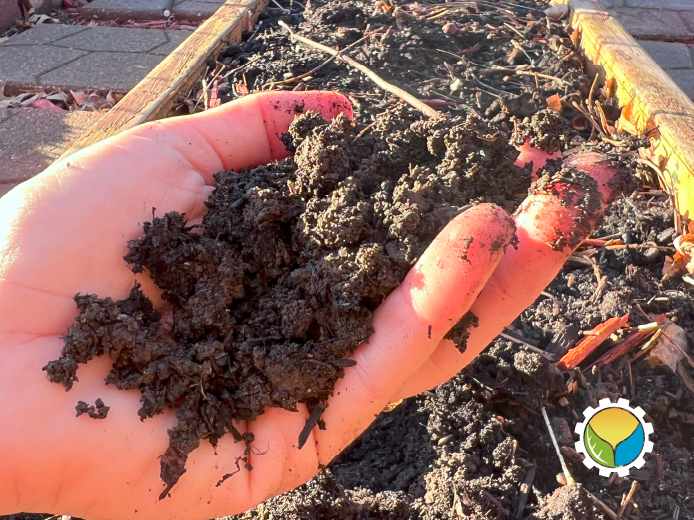
Biochar and compost together make for a “living” soil full of microbes.
Consider biochar, especially wood-based, as a facilitator and supporter of soil health rather than a direct nutrient source. Inoculating biochar can increase microbial colonization rates and beneficial effects in biochar-amended soils. (Palansooriya, K., et al.,2019) These soil microorganisms form the cornerstone of life on Earth. While they can function independently, their true strength lies in forming ecological alliances and colonies. Working together, the microorganisms break down decaying plant matter and release nutrients in soluble form, resulting in humus – fully decomposed organic matter that is abundant in nutrients, minerals, and essential for healthy plant growth. When biochar is added, the natural decomposition process is accelerated and amplified because humus and biochar are both reservoirs that store these liquid plant foods on their surfaces, preventing them from washing away in rain or irrigation water.
Inoculating (or “charging”) your biochar will:
- Stabilize the soil’s pH around 5, creating a slightly acidic environment that enhances nutrient availability for many plants. (Berek, A., Et al., 2011)
- Boost the soil’s cation exchange capacity (CEC) which enhances the soil’s ability to retain and supply essential nutrients. (Abdel-Fattah, T., Et al., 2015)
- Foster synergies and symbiotic relationships, leading to a healthier and more balanced soil ecosystem.
So maybe you’re convinced you need to “charge-up” your biochar. So how do you do it?
Get fully charged biochar from us at ARTi !!
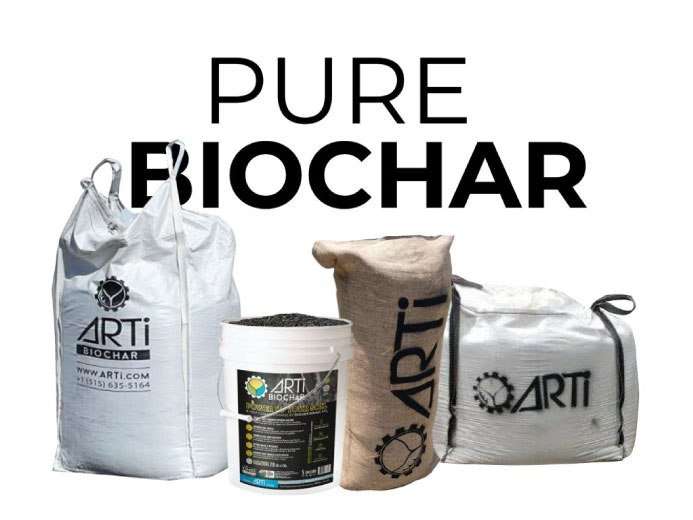
Right from our website you can get our ready-to-use products, fully charged biochar with wormcastings and our biochar blend with compost (10% Biochar + 90% Compost). We also have Micronized Biochar (MicroOrganic) which is balanced with a proprietary organic blend of macro- and micro-nutrients, healthy organisms, as well as essential elements for a nourishing and balanced plant food. And you could also try ARTi Micronized Biochar (MicroBlack) which is pure biochar and an innovative powder formulation of microscopic biochar particles. Since it needs to be inoculated, for best results, it can be applied in water, or even better with Compost Tea, providing natural nutrients and beneficial microbes. It creates a soil with perfect health, chemical and physical conditions to maximize plant growth and root development for vegetables, lawns, gardens and compost piles. Here’s where you can go to our store (link).

Combining biochar and compost enhances soil health, creating an ideal environment for robust plant growth, as you can see from these happy young plants.
If you still want to charge-up your biochar yourself or just find out more…
There are several methods to inoculate your biochar, and you can use any one of them individually or in combination. Select the method that is most suitable to your own situation. The key is to ensure your biochar is infused with microbial life, making it an effective soil amendment.
Co-composting biochar:
Co-composting biochar with your usual compost materials is an effective method for inoculating it. Create your compost pile by layering high-carbon materials (like straw, and plant residues) with high-nitrogen materials (such as farm animal manure, fresh grass clippings or chicken manure). Apply a layer of 1 inch of biochar on top of the compost bin every time you add organic residues. It will avoid odours, retain moisture, increase nutrients and reduce GHG emissions. Keep the mixture moist and rotate the pile every week or two. After cooling, let the pile sit for two to four weeks to fully charge the biochar.
Mix the Biochar with Finished Compost:
For a smaller, garden scale project, mixing biochar with finished compost in a two-part compost to two part biochar ratio is an effective method. Fill a leak-proof container with the mixture, stir it every few days, and drain the liquid for plant watering or foliar-feeding. Use the wet compost-biochar mixture on garden soil. For larger scale projects it can vary, we recommend mixing between 5-10% of biochar by volume on the compost pile.
Mixing biochar with farm animal manure:
Mixing farm animal manure with biochar can add microbes and minerals to the garden or biochar. You can choose from pig, goat, chicken, turkey, cow, sheep or horse manure. However, cow, cattle, sheep, and horse manure have less nitrogen and may spread weeds in the garden due to their tendency to eat ripe seeds.
Soak the biochar in nutrient-rich liquids:
Biochar can also be inoculated by soaking it in nutrient-rich solutions like compost tea, fish emulsion, urine or manure. Allow the biochar to sit for a month after mixing it 50 percent with compost tea or another nutrient-rich liquid. Stir it every few days to keep it from drying out.
Mix With Wormcastings:
Mixing biochar with worm castings is a great way to inoculate it with nutrients. Worm castings are the residue of organic matter digested by worms, richer in nutrients than compost. For every 10 gallons of biochar and worm castings, add flour and water to create a wet slop. This encourages fungi to colonize the mix, resulting in better soil particle aggregation and water-holding capacity. The mixture can ferment rapidly and be usable in three weeks, but it’s preferable to let it sit for four to eight weeks to fully colonize microbes and establish their ecosystems.

Worms are long time friends of soil. For biochar mixtures we want the worm castings which are nutrient-rich waste produced by earthworms, often used as a natural fertilizer to enrich soil and support plant growth.
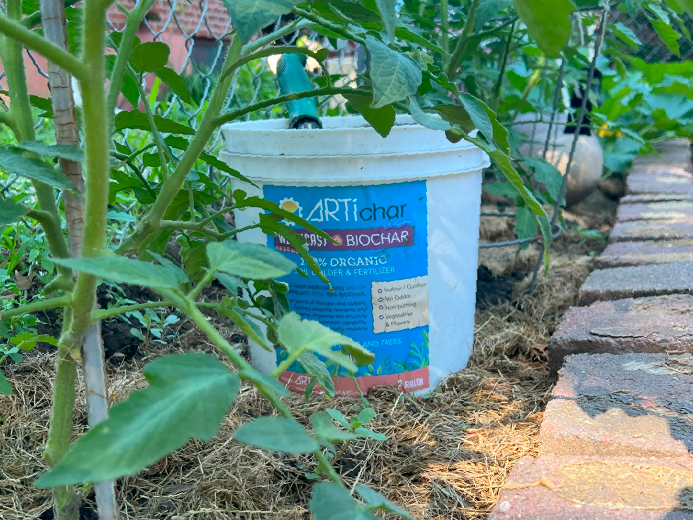
You can get biochar with worm castings together from ARTi ready to go!
Supercharging your soil with inoculated (or charged-up!) biochar can lead to thriving plants and healthier soil overall.
You can pick the way that works best for what you need and have. This can turn your garden into a lively green space. So, get ready to dig in and get your hands messy. You’ll see your garden do better than ever! Enjoy your time in the garden or on the farm!
References:
Abdel-Fattah, T., Et al., 2015, Biochar from woody biomass for removing metal contaminants and carbon sequestration, Journal of Industrial and Engineering Chemistry https://www.sciencedirect.com/science/article/abs/pii/S1226086X14003402
Berek, A., Et al., 2011, Beneficial Use of Biochar To Correct Soil Acidity, Hānai‘Ai / The Food Provider https://www.ctahr.hawaii.edu/huen/nvh/biochar.pdf
Palansooriya, K., et al.,2019. Response of microbial communities to biochar‑amended soils: a critical review, Springer. https://link.springer.com/article/10.1007/s42773-019-00009-2

