


Biochar supports mycorrhizal fungi, enhancing nutrient absorption and plant health for productive soils.
Mycorrhiza sounds like an opaque scientific word but it means fungal root or more specifically, fungi that have a symbiotic relationship with the roots of many plants. You may not know it because most of us have never seen mycorrhiza even though they can be found in soil all the time and everywhere. The fungi that typically develop mycorrhizal associations with plants are found underground. Many mycorrhizal fungi are symbiotic and so cannot succeed in nature for long periods of time without their host. Because the fungus and the plant have a symbiotic relationship, both gain from one another. The association has no negative consequences for either the host plant or the fungus. Ongoing research on soil, plants, mycorrhiza, and biochar suggests biochar’s porous structure provides shelter from fungal grazers and increases soil microbial diversity, promoting mycorrhizal interactions.
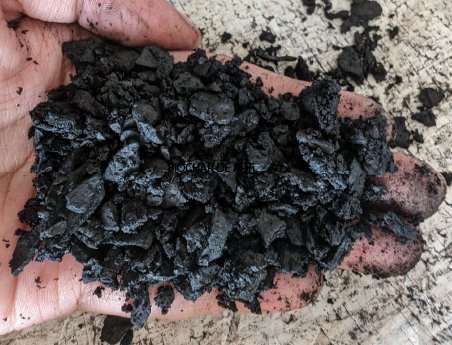
Biochar’s porous structure provides shelter from fungal grazers and increases soil microbial diversity, promoting mycorrhizal interactions.
Mycorrhizal fungi have a root-like structure and a mycelium network that extends beyond the tree roots into the soil. A mycelium network is those thread-like fungus systems you may have seen when walking through a forest and taking a closer look at a damp, fallen tree. Although in this case, it would not be found under the soil of course. As a network, they are called mycelium. The individual threads are known as hyphae. This mycelium takes nutrients and transports them back to the host plant. As a result, the plant root’s absorbing surface area increases. In turn, mycorrhizal fungi cannot photosynthesize like plants, so they get nutrients from their relationship with the plants.
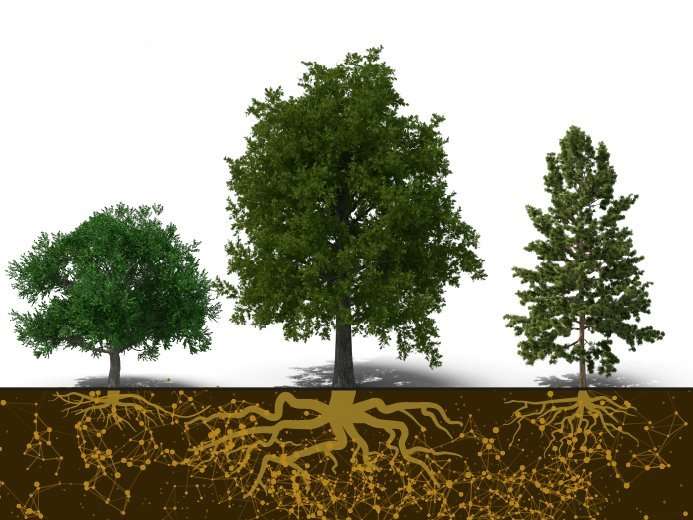
Mycorrhizal network illustration that shows it working with biochar and soil under the earth.
Mycorrhizal fungi absorb nutrients with their root-like structure and mycelium network and transport them back to plants. This increases the nutrient absorption surface area of the plant’s roots. Slow movement of nutrients, especially phosphorus, can cause plant deficiency symptoms. Mycorrhizal roots can help the plants gain better access to this phosphorus and are also able to form associations with decomposing organisms, allowing the plants to obtain nutrients from an otherwise unavailable source.
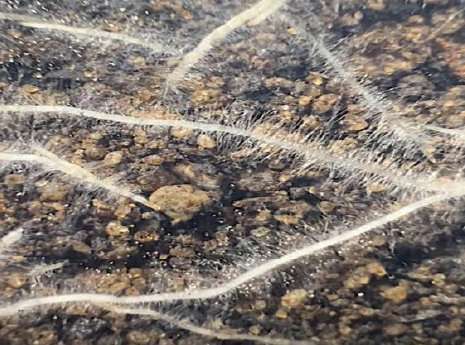
Mycorrhizal fungi have a root-like structure and a mycelium network.
Mycorrhiza helps plant vitality and biochar can help protect mycorrhiza.
Investigations into the relationships between soil, plants, mycorrhiza, and biochar are ongoing. One position that has been taken is that biochar’s highly porous structure gives shelter to the hyphae we spoke of from fungal grazers such as certain worms, mites or other microorganisms. Additionally, biochar can increase microbial diversity in soil (Liao et al., 2023). This can indirectly assist mycorrhizal fungi by resulting in a more complex and diverse soil microbiome, which promotes mycorrhizal interactions with other soil microbes. Biochar particles may serve fungi as a soil habitat more effectively than bacteria because hyphae can efficiently explore the interiors of solid substrates.
In another example of how mycorrhizal fungi thrive on the give and take of symbiotic relationships, as biochar ages in the soil, pores may become clogged with organic materials preventing bacterial colonization. Fungal hyphae, on the other hand, can metabolize the contents of closed pores. In this case, the hyphae from the mycorrhiza have a chance to help the biochar possibly giving its long use life cycle and even further extension. Again, research is ongoing (Thies et al., 2015).
ARTi has had the chance to view the positive impact of biochar in corn-growing soils and the striking increase in beneficial soil fungus from the biochar amendment. Have a look at a previous blog on ARTi’s corn trials here at this (link).
References:
Liao, W., Halim, M.A., Kayes, I., Drake, J.A.P. and Thomas, S.C. (2023). Biochar benefits green infrastructure: global meta-analysis and synthesis. Environ. Sci. Technol., 57(41)
Thies, J.E., Rillig, M.C. and Graber, E.R. (2015). Biochar effects on the abundance, activity and diversity of soil biota. In: Lehmann, J., Joseph, S. (eds) Biochar for environmental management: science, technology and implementation. 2nd edn. Routledge, New York, pp. 327–389.

